XIAMEN OLINK IMPORT & EXPORT CO., LTD
Especialmente desenvolve, produz e vende conectores / terminais / chicotes de fios / interruptores.


-
Ligue para nós 0592 6536915
-
Envia-nos um email sophia@fzolink.com
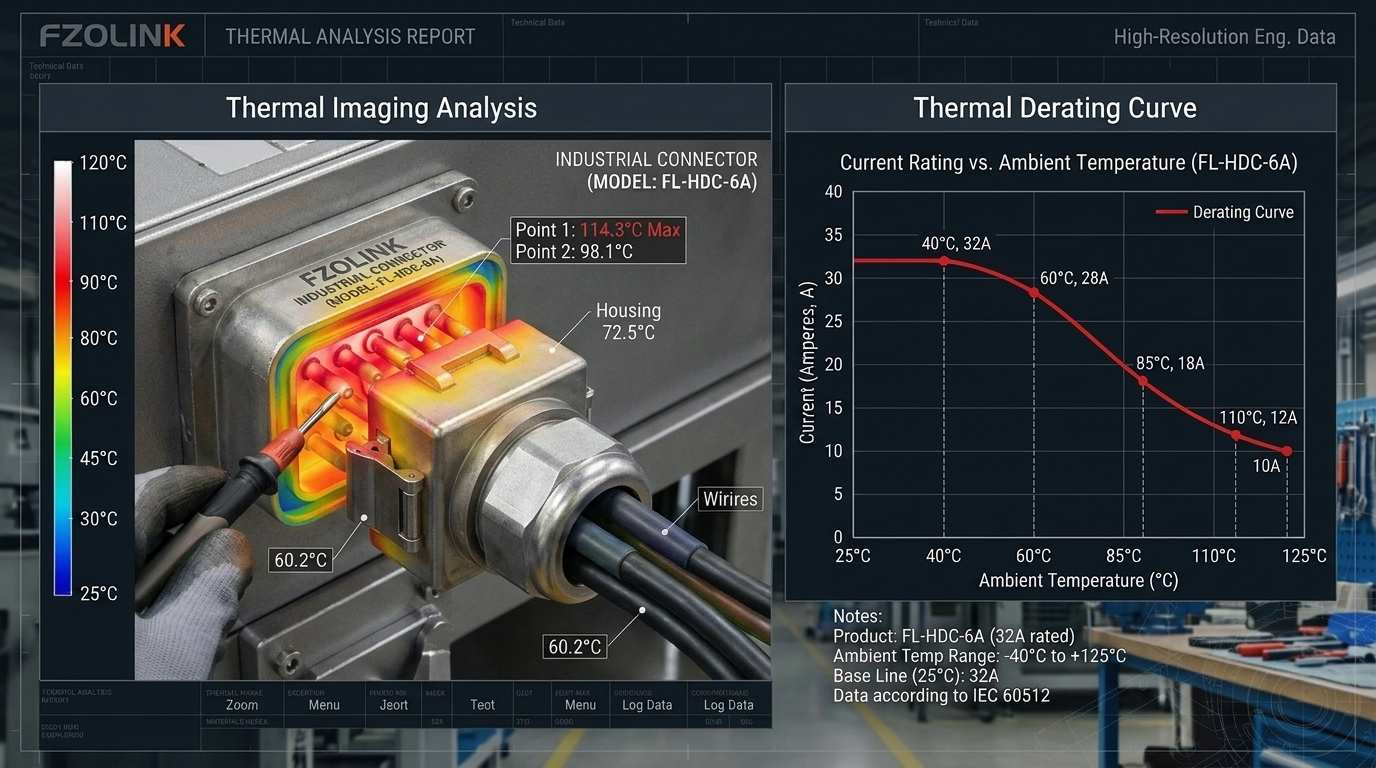
When designing electrical infrastructure for heavy industry, outdoor renewable energy grids, or aerospace applications, environmental stressors often dictate system longevity far more than electrical load. Among all environmental variables, extreme temperature fluctuation is the most silent and destructive. A connector that performs flawlessly in a 25°C climate-controlled laboratory can experience catastrophic mechanical and electrical failure when deployed in a freezing offshore wind turbine or a blistering desert solar farm.
Temperature anomalies attack electrical interfaces on a molecular level—warping insulating polymers, accelerating metallic oxidation, and destroying waterproof seals. Understanding how extreme heat and deep cold affect material properties is crucial for system architects. This comprehensive technical guide breaks down the physics of thermal stress and explains how advanced temperature-resistant connectors safeguard mission-critical industrial networks.
Every material has a specific Coefficient of Thermal Expansion (CTE), which measures how much it expands when heated and contracts when cooled. In an electrical connector, you have highly conductive metal pins encased in a dielectric plastic housing. Because metals and plastics have vastly different CTEs, rapid temperature swings—such as a solar farm transitioning from a freezing night to a scorching afternoon—cause these materials to push against each other at different rates.
This continuous microscopic shifting leads to a phenomenon known as thermal micro-fretting. The male and female contact pins rub together, gradually scraping off their protective gold or silver plating. Once the base copper is exposed, it rapidly oxidizes, spiking the contact resistance. To combat this in outdoor energy grids, engineers utilize high-temperature solar PV connectors molded from engineering-grade thermoplastics (like LCP or specialized PA66) that possess CTEs closely matched to the internal copper alloys, minimizing differential movement.
Heat is the ultimate enemy of high-power transmission. As electric current flows through a connector, it generates internal heat (Joule heating). If the ambient environmental temperature is already very high (e.g., inside an unventilated battery storage container operating at 60°C), the connector cannot dissipate its internally generated heat into the surrounding air.
If the total temperature (Ambient + Joule Heating) exceeds the melting point of the plastic housing, the connector will suffer a thermal meltdown, leading to catastrophic short circuits and fires. This is why electrical engineers must strictly adhere to a Thermal Derating Curve. As ambient temperature rises, the maximum allowable current must be mathematically reduced (derated). For high-amperage applications, specifying heavy-duty battery energy storage connectors with ultra-low contact resistance and massive copper cross-sections is mandatory, as they generate significantly less internal heat, allowing them to operate safely at higher ambient temperatures.
While heat melts and oxidizes, extreme cold destroys through embrittlement. Standard commercial plastics, such as ABS or standard PVC, have a relatively high "glass transition temperature." When the thermometer drops to -20°C or below (common in refrigerated automation warehouses or northern oil rigs), these plastics lose their impact resistance and become as brittle as glass. The slightest mechanical shock or cable vibration will shatter the connector housing.
More critically, extreme cold destroys waterproofing. The standard NBR (Nitrile) rubber O-rings used in cheap connectors freeze, shrink, and lose their elastic compression. Once the seal shrinks, atmospheric moisture instantly penetrates the housing. To survive arctic conditions, high-end IP68 waterproof industrial enclosures and plugs exclusively utilize high-grade silicone or fluorosilicone sealing gaskets, which retain their flexible molecular structure down to -50°C, guaranteeing continuous environmental isolation.
| Component | Commercial Grade Material | High/Low Temperature Industrial Grade |
|---|---|---|
| Insulating Housing | Standard ABS / PVC (Brittle at cold, softens at 70°C). | PA66 / PEEK / LCP (Stable from -40°C to +150°C+). |
| Waterproof O-Rings | NBR Rubber (Hardens and shrinks below -10°C). | Liquid Silicone Rubber (LSR) (Remains elastic at -50°C). |
| Cable Jacketing | Standard PVC (Cracks under cold flexing). | PUR / XLPE (Cross-linked polyethylene for solar UV/Heat). |
| Contact Plating | Flash Gold or Tin (Oxidizes rapidly under thermal cycling). | Hard Gold or Thick Silver (Maintains low resistance under heat). |
Extreme heat increases the electrical resistance of metal contacts and accelerates the oxidation process. Furthermore, it can cause standard plastic housings to warp, melt, or lose their dielectric strength, leading to severe short circuits.
A thermal derating curve is an engineering chart that shows how much the maximum current-carrying capacity of a connector must be reduced as the ambient temperature rises, ensuring the component does not exceed its safe operating temperature limit.
In extreme cold (below -20°C), standard rubber O-rings and commercial plastics lose their elasticity and become brittle. When exposed to mechanical vibration, these brittle materials micro-fracture, instantly destroying the IP67/IP68 waterproof seal.
Do not let extreme environments compromise the integrity of your industrial equipment. At Xiamen Olink, our engineering team specializes in manufacturing ultra-reliable solar PV connectors, high-current battery interfaces, and custom wire harnesses designed to survive punishing temperatures from -40°C to +125°C. Contact our technical sales department today to specify the right materials and thermal ratings for your next mission-critical project.
Tel : 0592 6536915
Móvel : 8613950494073
O email : sophia@fzolink.com
Skype : Zheng lris
Whatsapp : 8613950494073