XIAMEN OLINK IMPORT & EXPORT CO., LTD
Especialmente desenvolve, produz e vende conectores / terminais / chicotes de fios / interruptores.


-
Ligue para nós 0592 6536915
-
Envia-nos um email sophia@fzolink.com
Índice:
1. Compreendendo conectores à prova d'água: tipos e seleção
1.1 Tipos comuns de conectores à prova d'água (explicação das classificações IP)
1.2 Correspondendo o conector à aplicação
1.3 Lista de verificação de ferramentas essenciais
2. Preparação pré-instalação: a chave para uma vedação duradoura
2.1 Inspeção e preparação dos cabos
2.2 Configuração da fiação e verificação da polaridade
2.3 Compreendendo prensa-cabos de vedação e anéis O-Ring
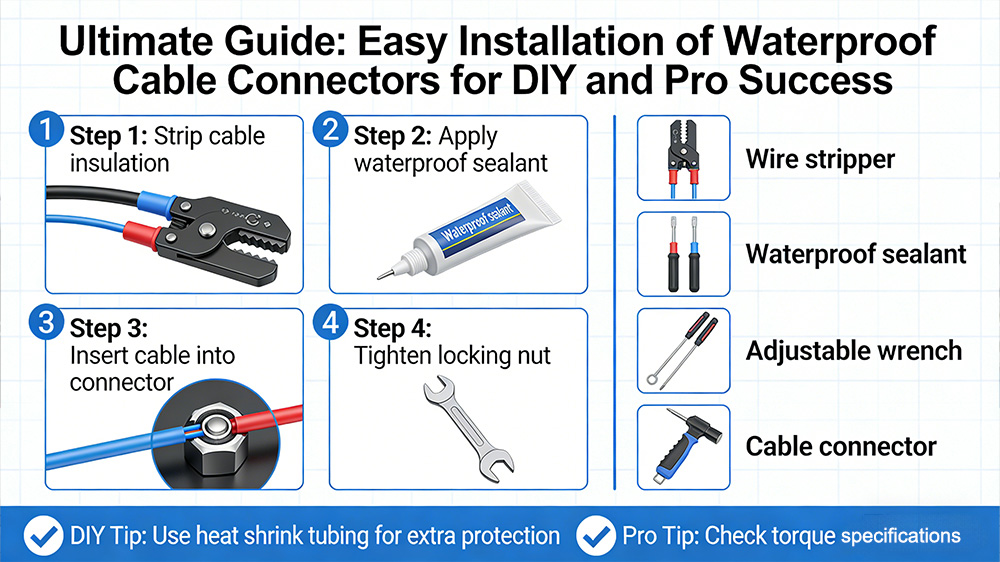
3. Instalação passo a passo de conectores do tipo compressão
3.1 Terminação de fios (considerações sobre crimpagem vs. soldagem)
3.2 Montagem do corpo do conector
3.3 Obtendo compressão ideal para resistência à água
4. Utilização de emendas impermeáveis preenchidas com gel e em linha
4.1 As vantagens dos conectores preenchidos com gel
4.2 Instalação de kits de emenda impermeáveis termorretráteis
4.3 Conectando e vedando junções em linha
5. Testes e manutenção pós-instalação
5.1 Realização de verificações finais de integridade
5.2 Melhores práticas de inspeção para maior durabilidade
5.3 Solução de problemas de falhas comuns de instalação
6. Conclusão
Os conectores de cabos à prova d'água mantêm seus fios protegidos contra chuva, poeira e umidade. Sem eles, a corrosão pode arruinar os sinais e fazer os equipamentos falharem rapidamente. Muitos pensam que a instalação exige habilidades especiais, mas este guia mostra etapas simples para a instalação de conectores de cabos à prova d'água. Você obtém dicas fáceis de fiação DIY que funcionam para projetos domésticos ou trabalhos profissionais.
Entendendo os conectores à prova d'água: tipos e seleção
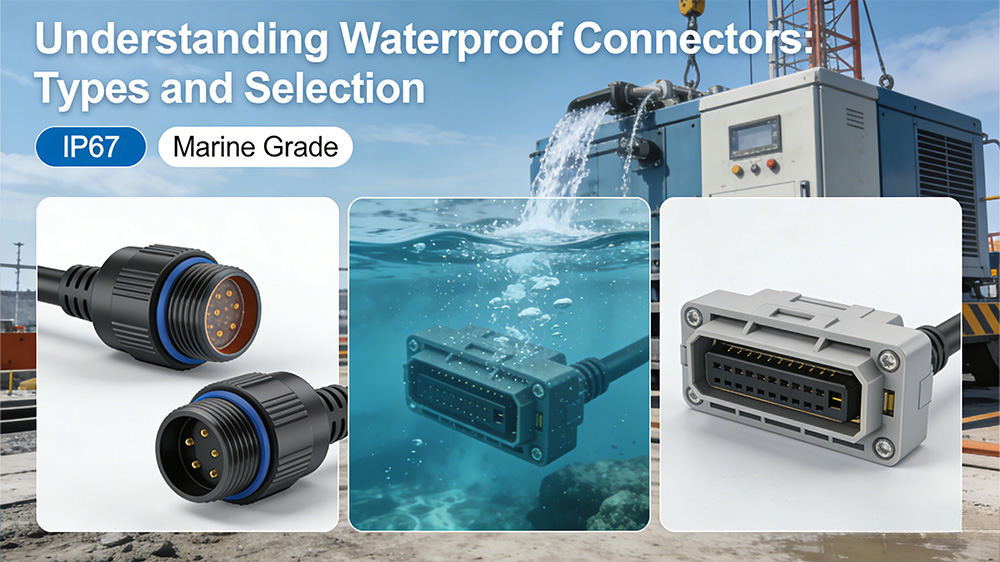
Essas peças protegem os fios em locais difíceis, como áreas externas ou próximas à água. Conheça o básico antes de começar. Isso ajuda você a escolher o correto para suas necessidades.
Tipos comuns de conectores à prova d'água (classificações IP explicadas)
Os conectores da série M travam os fios com um corpo rosqueado. As porcas de prensa-cabo comprimem ao redor dos cabos para uma vedação firme. Os tipos em linha unem fios no meio do percurso sem grandes carcaças.
As classificações IP indicam os níveis de proteção. IP67 bloqueia poeira e suporta breves imersões em água. IP68 vai além com submersão total até determinadas profundidades. Verifique o número para corresponder aos riscos da sua instalação.
Para luzes externas, IP67 costuma funcionar bem. Em barcos, escolha IP68 para resistir à umidade constante.
Correspondendo o conector à aplicação
Observe primeiro o local. Linhas submersas precisam de vedações mais fortes do que as expostas. A bitola do cabo também importa — cabos AWG mais grossos, como 12, precisam de encaixes maiores.
A corrente e a tensão têm um papel importante. Luzes de jardim de baixa tensão usam conectores de 12V. Equipamentos marítimos de alta potência exigem 24V ou mais com pinos grossos.
Pense em decorações externas de feriados. Use IP65 para chuva leve. Para bombas de piscina, escolha IP68 para evitar choques.
Lista de verificação de ferramentas essenciais
Reúna estes itens antes de começar:
· Descascadores de fios para cabos de 14-22 AWG.
· Ferramenta de crimpagem com matrizes para o tamanho do seu fio.
· Pistola de ar quente para tubo termoencolhível.
· Graxa dielétrica ou selante.
· Multímetro para testes.
Ferramentas de qualidade duram mais. Um descascador barato danifica os fios e causa rupturas. Calibre sua ferramenta de crimpagem para obter fixações firmes.
Preparação pré-instalação: a chave para uma vedação duradoura
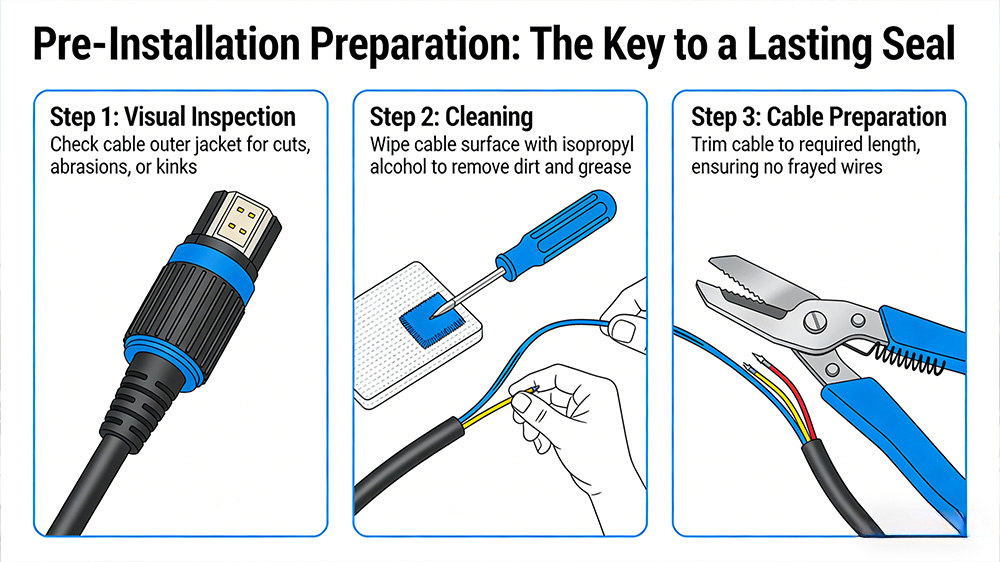
A preparação evita vazamentos mais tarde. Ignore isso e a água entra. Siga estas etapas para conexões fortes.
Inspeção e preparação dos cabos
Verifique se os cabos têm cortes ou desgastes. Endireite-os. Remova 1/4 de polegada do isolamento — não corte o cobre interno.
Limpe a capa externa. Óleos ou sujeira impedem a vedação. Use lenços com álcool para uma superfície seca.
Uma preparação inadequada causa 30% mais falhas em áreas úmidas, de acordo com testes de campo.
Configuração da fiação e verificação de polaridade
Combine as cores corretamente — vermelho no positivo, preto no aterramento. Os pinos devem estar alinhados em configurações com vários fios.
Teste com um multímetro agora. Configure para continuidade e encoste as pontas de prova nas extremidades. Sem bipe significa uma ruptura; corrija-a antes.
Esta etapa economiza horas. A polaridade incorreta queima equipamentos ao ligar.
Entendendo Prensa-cabos e Anéis de Vedação
Prensa-cabos comprimem borracha ao redor dos cabos. Anéis de vedação ficam dentro de carcaças para bloqueios extras.
Coloque os anéis de vedação nivelados, não torcidos. Lubrifique-os levemente com graxa para deslizarem com facilidade.
Um encaixe incorreto deixa a água passar. Um bom prensa-cabo mantém a pressão como a válvula de um pneu de bicicleta.
Instalação passo a passo de conectores do tipo compressão
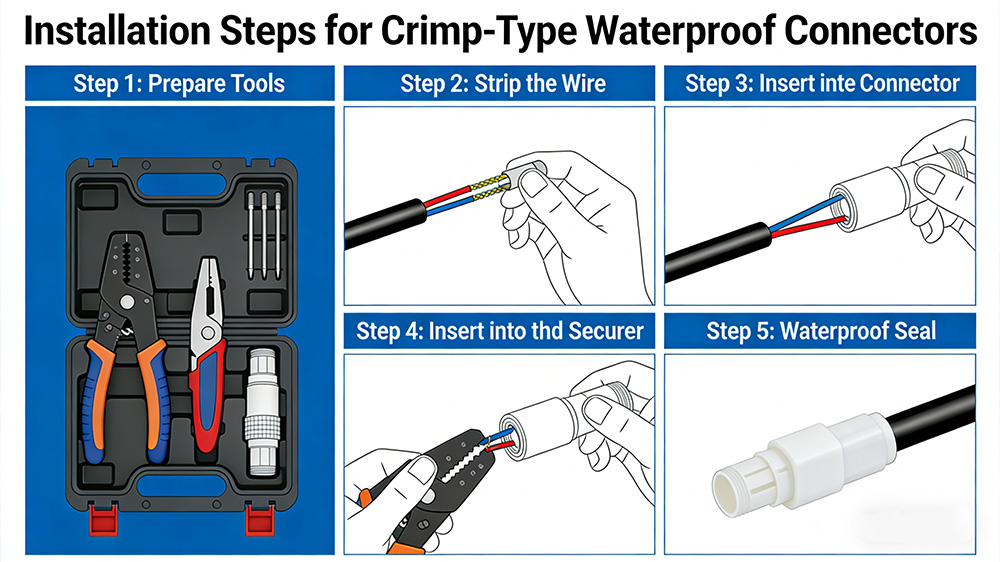
Os tipos de compressão apertam as vedações firmemente. Eles são comuns em instalações fixas. Vá devagar para obter os melhores resultados.
Terminação de fios (considerações sobre crimpagem versus soldagem)
Faça a crimpagem para ganhar velocidade — aperte os pinos nas extremidades desencapadas. Use a matriz correta para evitar achatamentos.
Faça soldagem para obter resistência em ambientes com vibração. Aqueça a junta, adicione fluxo e depois estanhe. Cubra com termo retrátil adesivo para proteção contra umidade.
Teste de tração das crimps: puxe com força; deve suportar 10 libras. As fracas falham com o vento.
A soldagem exige prática, mas supera as crimps em ar salino.
Montagem do corpo do conector
Deslize a porca sobre o cabo primeiro. Nunca se esqueça disso — é um erro comum.
Insira os fios desencapados no encaixe. Empurre até que os pinos fiquem totalmente assentados.
Feche o corpo com um encaixe. Alinhe quaisquer guias para evitar curtos-circuitos.
Obtendo compressão ideal para resistência à água
Aperte a porca manualmente primeiro. Adicione um quarto de volta com um alicate.
Aperte com torque de 5 a 7 libras-polegada se tiver uma chave. Apertar demais esmaga a borracha; apertar pouco deixa gotas entrarem.
Teste sacudindo — sem folgas significa uma boa vedação. Este método reduz vazamentos pela metade em trabalhos de faça você mesmo.
Utilizando emendas à prova d'água preenchidas com gel e em linha
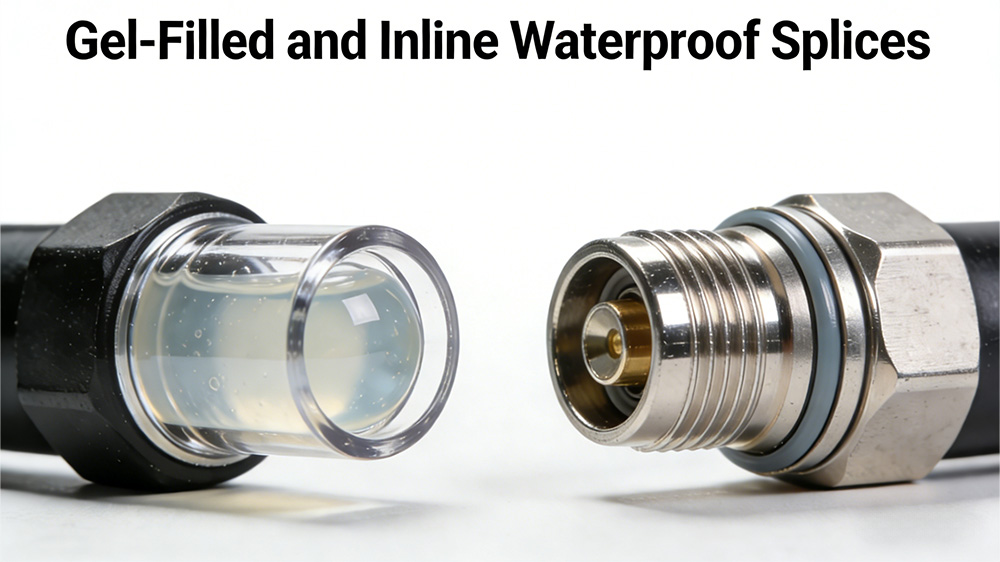
Emendas unem fios cortados. Os tipos com gel preenchem espaços com uma substância pastosa. Use-as quando não puder alcançar as extremidades.
As vantagens dos conectores preenchidos com gel
O gel expulsa o ar e a água. Ele permanece macio, sem endurecimento completo.
Ótimo para baixa tensão, como irrigação de 24 V. Em caixas de aspersores, bloqueia lama e chuva.
Um estudo mostra que emendas com gel duram 5 anos a mais do que fita em solo.
Instalando kits de emenda impermeável termo retrátil
Desencape ambos os fios em 1 polegada. Torça as extremidades juntas.
Deslize o tubo termo retrátil sobre a conexão, com adesivo no interior. Aqueça do meio para fora — observe a cola escorrer.
Sobreponha 1/2 polegada além da junta. A fusão completa veda como um tubo colado.
Conectando e vedando junções em linha
Corte a folga do fio para ajustar. Faça laços organizados com o excesso para evitar puxões.
Insira na carcaça em linha. Vede as extremidades com tampas ou porcas.
Em trajetos como luzes de cerca, isso mantém as linhas organizadas. A tensão rompe as vedações rapidamente caso contrário.
Testes e manutenção pós-instalação
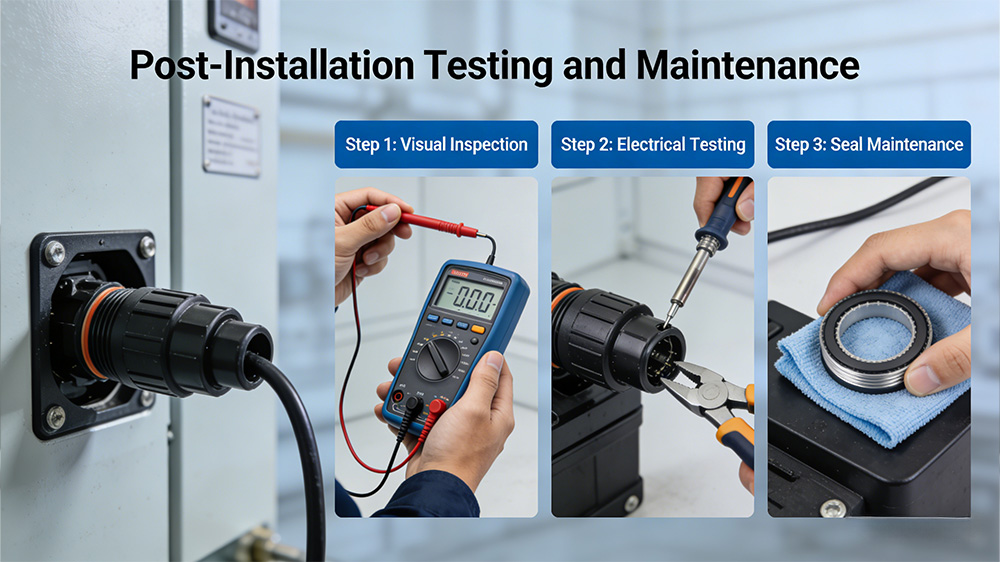
Teste imediatamente. Os cuidados mantêm o funcionamento por anos. Ignore isso e os problemas se acumulam.
Realizando verificações finais de integridade
Borrife água levemente na junção. Sem gotas após 5 minutos? Está bom.
Verifique a continuidade novamente. Ligue com baixa potência — observe se há calor ou faíscas.
Mova os fios suavemente durante os testes. O estresse revela pontos fracos.
Melhores práticas de inspeção para maior durabilidade
Verifique anualmente as porcas e os revestimentos. Rachaduras significam que é preciso substituir em breve.
A radiação UV desbota o plástico rapidamente ao sol. Cubra as partes expostas se puder.
Limpe a graxa com um pano. A sujeira esconde o desgaste.
Solução de problemas de falhas comuns de instalação
Há água dentro? Verifique a profundidade da faixa ou o aperto da porca.
O sinal cai? Recrimpe ou solde novamente os pinos.
Encaixe solto? Prensa-cabo de tamanho errado — troque-o.
Corrija cedo para economizar refiações completas.
Conclusão
Conectores de cabos à prova d'água protegem suas instalações contra o pior clima. Prepare bem, monte corretamente e teste completamente para obter vedações que durem. Siga estas etapas fáceis de fiação DIY e evite problemas comuns. Pegue suas ferramentas hoje e torne seu próximo projeto totalmente vedado contra água. Seus equipamentos agradecerão com anos de funcionamento sólido.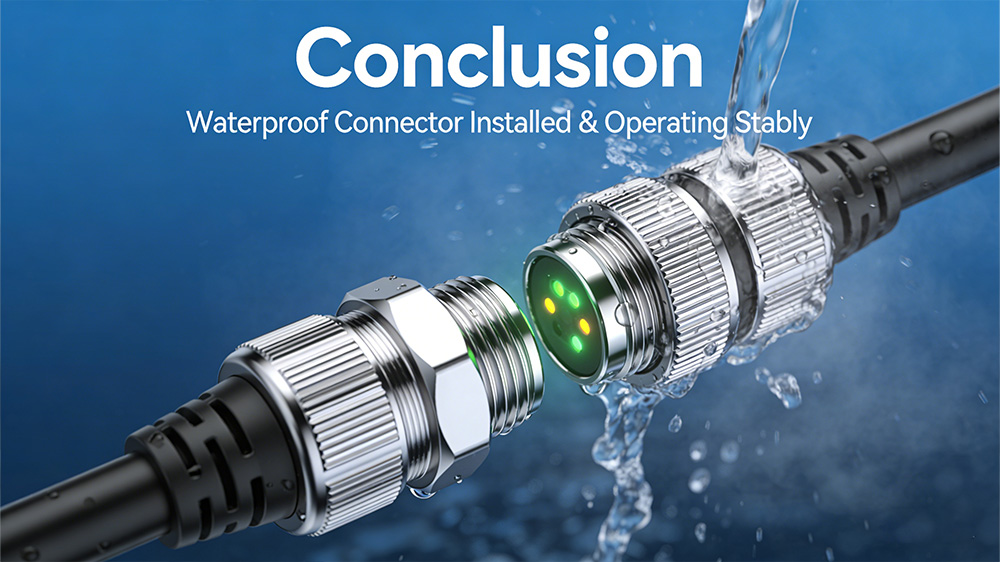
Tel : 0592 6536915
Móvel : 8613950494073
O email : sophia@fzolink.com
Skype : Zheng lris
Whatsapp : 8613950494073